
Phil here, (Founding author of Fat-loss-quest.co.uk) with the motivations behind my own weight loss journey and how they can guide you in your weight loss journey.
At 34, I had plenty of reasons for losing weight. I was carrying around 28lbs more than I wanted, my waist had grown from around 28–30 inches to approaching 38, and I’d reached the point where looking down and seeing my toes had become something of a distant memory.
Some of my reasons were obvious. I wanted the belly gone. I wanted my old physique back. I wanted to feel fitter, move better and regain some of the self-respect I’d lost along the way. So I changed what I ate, became active again and lost the weight in around 12 weeks. But that turned out to be only the beginning of the story.
Nearly three decades later, I’ve maintained that loss and lived through relationships, physically demanding jobs, health scares, fatherhood for a second time and experiences I could never have anticipated at 34. Looking back, some of the most important reasons for losing the weight weren’t even on my original list.
These are the 12 reasons that mattered to me then — and what happened afterwards.
1.Lose the Belly Fat

Losing my belly fat was my primary goal. Getting rid of the rest of my excess body fat would come with it — a natural progression.
Losing that 8-inch belly fat — along with the 28 lbs of excess body weight — wasn’t just about health or vanity. While there are health benefits to losing weight, particularly excess abdominal fat, for me it was mainly about self-respect.
But, as with many obesity-related problems, a darker side was about to reveal itself.
Had I not lost the excess weight and the beer belly, who knows where it might have led? There is only so far you can take the “it’s all paid for!” attitude — or use your belly as a makeshift table — before the joke starts wearing a little thin.
2. Re-Gain My Slim Physique
For most of my childhood and teenage years, being overweight simply wasn’t part of my life. I was naturally slim and active — noticeably slimmer than the rest of my immediate family. My parents were both more stockily built and my sister was obese.
In fact, my slim build was noticeable enough for my mother to jokingly refer to me as “one of Pharaoh’s lean kind.”
By the age of 34, that familiar physique had disappeared beneath almost 28 lbs of excess weight and a waist that had expanded from around 28–30 inches to approaching 38 inches.
I didn’t particularly like the person looking back at me in the mirror.
Losing my belly was the immediate objective, but underneath it was something else:
I wanted my old physique back.
I wasn’t trying to recreate my teenage body or chase some unrealistic physical ideal. I simply wanted to look and feel more like the naturally slim, active person I’d been for most of my earlier life.
Twelve weeks later, the excess weight had gone, my waist was back to around 28 inches and — helped by the squash, swimming and gym sessions I’d added along the way — I was considerably fitter and more muscular too.
In some ways, I’d regained something familiar.
But I’d also built a better version of it.
3. Re-Gain Self-Respect
Respecting yourself is very important. If you have little respect for yourself — and your health — then you can easily find yourself going downhill in both appearance and health.
But we’re not talking lip service here!
Losing the weight didn’t just help me regain my own self-respect. It also changed the way other people saw and treated me.
There is an uncomfortable side to the obesity-versus-normal-weight debate that I’ve observed for decades. Some people will fiercely defend their own weight while turning the argument around and verbally attacking slimmer people. I’ve been a people-watcher for more than 50 years, as well as having a long-standing interest in psychology, and I’ve witnessed that behaviour often enough to recognise it.
But prejudice certainly isn’t confined to one side.
Unfortunately, people do look down on people who are overweight or obese — and that’s more than my personal observation. Weight stigma and discrimination have been documented in research and recognised by the World Health Organization.
For someone of shorter stature, I felt that disrespect even more strongly. People weren’t simply looking down on me because of differences in height; carrying the excess weight seemed to add another level to it — regardless of how subtle the slight or insult might have been.
Re-gaining my self-respect through losing weight and improving my health changed that relationship.
And if someone’s “friendship” depended upon being able to belittle me because of my height, weight or appearance, improving myself would ultimately be their downfall — not mine.
They would lose the friendship I had offered them.
4. Improve Physical Movement Abilities
All that excess weight was getting me down. Bending or kneeling down to tie my shoes was taking too long. The very act of manipulating my body around the bulge was becoming annoying and time-consuming. It was holding me back from living life to the full.
And it wasn’t only about tying my shoes.
I wanted to be able to:
- walk faster,
- get household jobs done without my body getting in the way,
- enjoy leisure activities,
- play with my children,
- take part in sports, and
- carry my photography equipment without feeling that I was hauling two loads around — my gear and my excess body weight
I also wanted to remain physically capable in my relationships. Being a fitter and more physically capable lover might not appear on many lists of “health reasons to lose weight”, but we’re talking about living life to the full here — not simply producing better numbers on a set of bathroom scales.
There is a broader implication to all this movement too. Everyday physical activity — walking, standing, doing household jobs, carrying things and generally moving around — contributes to our daily energy expenditure. Scientists commonly group much of this activity under Non-Exercise Activity Thermogenesis (NEAT).
That matters because exercise isn’t the only opportunity we have to expend energy. The ordinary movement accumulated throughout the day can make a meaningful contribution too.
And there’s potentially a useful feedback effect: carrying less excess body weight can make everyday movement easier and more comfortable; becoming more active creates more opportunities to expend energy; and maintaining that activity can help support longer-term weight management.
Losing excess body fat may have implications beyond movement as well. In men, obesity — particularly excess abdominal fat — has been associated with lower testosterone levels, while weight loss has been associated with increases in testosterone in some men.
That’s something I’ll return to later, because Reason #11 — Boost Testosterone — turned out to be considerably more interesting than I could possibly have realised when I started losing weight.
5. Prevent T2 Diabetes
I can’t honestly claim that preventing Type 2 diabetes was one of the reasons I decided to lose weight at the age of 34. It wasn’t.
At the time, very few people in my extended circle had diabetes, and it certainly wasn’t at the forefront of my mind when I looked down at that expanding belly. This reason came later.
Only after losing the weight — and subsequently spending years researching nutrition, weight management and metabolic health — did I begin to understand that some of the changes I had made could also reduce recognised risk factors for developing Type 2 diabetes.
I had been carrying excess body fat, particularly around my waist. My diet had also become heavily dependent on large portions of carbohydrate-rich and processed foods. When I decided to lose weight, I reduced much of that food, changed what and how much I ate, became considerably more active, and lost 28 lbs.
I wasn’t trying to “improve my insulin sensitivity.” I didn’t even think in those terms. I was trying to lose my belly fat.
In the years since losing my weight, I’ve known people who progressed from pre-diabetes to Type 2 diabetes. I’ve watched some of them receive a diagnosis, be prescribed medication such as metformin, and then watched as, over time, their condition appeared to worsen rather than improve.
Watching that happen has been frustrating, because I now know that Type 2 diabetes isn’t necessarily an inevitable one-way journey of diagnosis, medication and progressive ill health.
That doesn’t mean medication such as Metformin has no value. It does mean that medication should not make us forget something extremely important: for some people, Type 2 diabetes can be put into remission.
Significant weight loss, dietary change and healthier lifestyle behaviours can fundamentally alter the course of the condition for some people. That’s no longer an alternative-health claim — the NHS itself now operates a Type 2 Diabetes Path to Remission Programme based on clinical-trial evidence.
What concerns me is seeing Type 2 diabetes treated as though managing blood glucose with medication is necessarily the end of the conversation. Where appropriate, why shouldn’t remission be part of that conversation too?
I can’t know whether continuing along the path I was on at 34 would eventually have led me to pre-diabetes or Type 2 diabetes. But knowing what I know today about excess body fat, particularly around the waist, I’m very glad I changed direction when I did.
6. New Relationships
Post break-up or divorce, it can be necessary to take some time out from relationships and allow your emotional wounds to heal.
Now is the time to focus on your own health, regain any lost self-respect, improve your overall wellbeing — including losing excess weight if necessary — and eventually start socialising again.
And when you do start meeting new people, physical attraction matters.
Research into human attraction and mate selection has found that physical characteristics influence how attractive we perceive another person to be. A recent review of more than 30 years of research concludes that physical characteristics contribute to mate assessment, while also emphasising that attractiveness varies according to the individual, their environment and their experiences.
Body shape is one example. Research involving British women rating male bodies has found that waist-to-chest ratio and BMI can contribute to perceived male physical attractiveness. Importantly, studies across different populations have also found differences in those preferences — another reminder that there is no single universally attractive body shape.
[Pub Med: Male physical attractiveness in Britain and Greece: a cross-cultural study Url: https://pubmed.ncbi.nlm.nih.gov/17345919/ ]
Of course, appearance isn’t everything. Personality, social behaviour, emotional connection and many other factors influence whether an initial attraction ever develops into a relationship.
But first impressions happen before you’ve had the opportunity to demonstrate most of those qualities.
For me, losing 28 lbs and around 8 inches from my waist meant I wasn’t presenting the same physical version of myself when I eventually began socialising again. I was slimmer, fitter and — importantly — had regained much of the self-respect and confidence I’d lost.
Weight loss couldn’t guarantee me a new relationship. But it could help me become a healthier and more confident version of the man entering one.
7. Improve Employability Fitness
Over the last few decades, businesses have faced increasing pressure to perform.
Sales, productivity targets and KPIs frequently lead the management agenda. If you’re not contributing to those figures with valuable effort, sooner or later your performance is likely to come under scrutiny.
Your mental, cognitive and physical ability to remain a valuable asset can matter.
Research published by the Institute for Public Policy Research (IPPR) in 2024 examined the relationship between obesity, health and the UK labour market:
IPPR : Scale of the Challenge: Obesity and the Labour Market
Their findings suggest a correlation between obesity and economic inactivity, while poor health associated with obesity can also affect people who remain in employment. Among employed people with obesity surveyed for the research, 55% reported going to work while sick and said that their sickness affected their work.
Interestingly, the relationship can work in both directions. IPPR also found that working conditions can make maintaining a healthier lifestyle more difficult. More than a third of workers surveyed said their work-life balance meant they rarely or never exercised as much as they would like, while others reported difficulties finding the time to cook healthy meals or plan meals in advance.
In the report, Dr. O’Halloran notes:
“Poor public health is holding back the UK economy, and obesity is playing a significant role”
Health can affect our ability to work — while the way we work can also affect our ability to remain healthy.
Employment protections exist for good reason, including protections against discrimination. But they don’t remove the requirement to perform the job you’re employed to do.
For me, that made physical capability another important reason for losing the excess weight.
During one period of employment as an engineering machinist, I was required to move some substantial components. Lifting equipment was available, but it wasn’t always readily available or convenient. That sometimes resulted in me carrying 37 kg solid-steel shafts 25–30 yards in my arms from one machine to another.
That’s an extreme example, but physical fitness isn’t relevant only to heavy manual work.
Research published in the Harvard Business Review looked at approximately 200 employees in the UK and China over 10 days, using both self-reported and wearable physical-activity data together with self- and supervisor-reported work outcomes.
[https://hbr.org/2023/05/to-improve-your-work-performance-get-some-exercise]
The researchers found that daily physical activity generated what they called next-day “resource caravans” — physical, emotional and cognitive resources associated with work outcomes.
These included:
- better-quality sleep (benefiting the body and brain)
- increased vigour (energy and vitality)
- improved task focus (supporting attention, concentration and information processing)
The researchers also found time-lagged associations with next-day task performance, creativity and health outcomes.
Job self-efficacy — an employee’s perception of their capacity to perform their job — also influenced some of the benefits associated with daily physical activity.
In other words, being physically active isn’t only about whether you can carry a 37 kg steel shaft, it’s also about supporting the cognitive resources — including attention, concentration and task focus — that can help you perform your job effectively.
Weight loss and improvements in metabolic health can benefit much more than our physical capabilities. There is growing research into their relationship with mental health and cognitive function too.
In short…
Your body can contribute to how effectively your brain turns up for work!
8. Improve Cardiovascular Health
For much of my working life, I carried out physically demanding manual work. That could certainly build muscular strength, raise my heart rate and burn considerable amounts of energy.
But I eventually learned that having a physically demanding job isn’t necessarily the same thing as being cardiovascularly fit.
Researchers have even identified what has become known as the physical activity health paradox. While regular leisure-time physical activity is consistently associated with cardiovascular health benefits, research into high levels of occupational physical activity has produced much more mixed results.
Nor could a physically demanding job somehow cancel out everything I did when I wasn’t working. Diet, excess body weight, physical inactivity outside work, smoking and harmful alcohol consumption are among the recognised factors affecting cardiovascular risk.
In my case, improving my diet, losing 28 lbs and adding focused exercise meant I wasn’t relying on my occupation to keep me fit.
I began playing squash, using the gym and swimming with a friend for two or three hours each week. These weren’t simply extensions of the physical work I was already doing. They deliberately challenged my fitness in different ways.
That became part of maintaining my weight and fitness over the years that followed.
Maintaining a healthier weight and remaining physically active hasn’t made me immune from cardiovascular problems, though. During my long-term weight-maintenance years, I’ve had two episodes that required hospital investigation.
The first occurred after a period in which I’d been doing a lot of cycling, including in poor weather. Hospital investigations identified scar tissue on my heart, although no cause was established. No continuing medication or further consultations were required.
The second happened years later, when intense chest pain resulted in another hospital admission. Investigations identified inflammation of the pericardial sac surrounding my heart rather than the digestive causes I had initially suspected. I was advised to use over-the-counter ibuprofen when the pain became particularly intense. Again, no continuing treatment or follow-up was required.
Those experiences reinforced an important distinction for me:
Improving your cardiovascular health doesn’t make you immune from cardiovascular problems.
Losing excess weight, improving my diet and remaining physically active allowed me to work on some of the cardiovascular risk factors within my control. It could never guarantee that I wouldn’t experience a heart-related problem later in life.
9. Save Money on Continually upsizing Clothing
One of the “non-scale victories of weight loss” is not having to constantly buy larger sizes to accommodate an expanding waistline.
By not having to continually replace clothes that no longer fit, there’s an obvious financial benefit too. And being comfortable with how your clothes fit can also affect how you feel about your appearance.
Many people opt for loose-fitting clothes to conceal increasing weight gain.
The problem is that loose clothing can also make it easier to ignore what is happening underneath it. If your clothes continue to fit as your waistline expands, you’ve removed one of the everyday warning signs that your body is changing.
The downside?
You may find yourself buying more expensive designer brands because they show off your new slim and trim figure better —
just as I did!
10. Prevent Prostate Cancer
Prostate cancer is a BIG problem for men. But it wasn’t something I was thinking about when I decided to lose weight at 34.
Years after my weight loss, I learned that excess body weight is among the modifiable factors associated with increased risk of advanced prostate cancer.
For me, prostate health became far more personal than any statistic.
My father’s prostate cancer and eventual death gave prostate health a deeply personal significance for me. My family history, meanwhile, is something I cannot modify.
My father had been relatively fit and active for much of his life. He’d been a keen sportsman, regularly playing football and cricket in his younger years. Later, a relatively active career in petrochemical processing and exploration kept him active, as did his golf.
However, he was eventually diagnosed with prostate cancer with an initial PSA level of 960. His doctor warned him that he might not survive long with a PSA that high. He underwent radiotherapy and, as the years passed, was eventually given the all-clear.
A few years passed and the cancer returned. It had entered his bones. During his reassessment, he underwent a prostate biopsy.
Afterwards, he developed urinary retention and required catheterisation. Urinary retention remains a recognised complication of prostate biopsy; current NHS Trust guidance for transperineal biopsy puts the risk at around 1 in 20 men (5%).
The REAL problem came next. He developed an infection associated with the catheter, followed by septic shock from which he did not survive.
Forty-eight hours. Gone!
His experience inevitably affected the way I viewed my own prostate health — and made me wary of simply assuming that my own future would be any different.
In the years since my father’s death, I’ve spent considerable time reading about nutrition, body weight, exercise and prostate health.
Some nutrients — including lycopene — have attracted considerable research interest. But the evidence is far less conclusive than some health claims suggest.
What has emerged more clearly is the evidence linking excess body fat with advanced prostate cancer.
That distinction matters to me. I can’t know whether a different diet or lifestyle would have changed my father’s outcome.
I’ve had my PSA checked several times over the years, with my most recent result below 3.0. I also continue to pay attention to my weight, diet, exercise and overall health.
None of that makes me immune from prostate cancer.
I can’t change my family history, and maintaining a healthier weight cannot guarantee that I’ll avoid prostate cancer.
What I can do is look after the factors within my control, remain aware of my family history and continue to take prostate health seriously.
11. Boost Testosterone — The Testosterone Effect
At the time I lost the weight, I had little knowledge of all the physiological changes that might be happening inside my body.
I just wanted to lose the weight and get fit.
Testosterone was little more than a word I occasionally heard associated with male physiology. I certainly didn’t understand much about what it did, or how excess body fat, weight loss, exercise and improved fitness might relate to testosterone levels in men.
I learned about that science much later.
What I noticed first were the changes I could actually see and feel.
I’d lost 28lbs. My waist had fallen from almost 38 inches to around 28 inches. I was fitter, more muscular and more flexible. I felt comfortable in my body again.
And my confidence had changed enormously.
Looking back, there are three experiences from those years that particularly stick in my mind.
The LBD Experience

Reasons for Losing Weight aren’t always obvious
I certainly wasn’t expecting a beautiful young woman to focus her attentions on me, but that is just one of the many possibilities of losing weight and improving your confidence.
Not the woman from the story — but the little black dress and Christmas-party setting seemed rather appropriate.
It was Christmas and we’d just had the works Christmas dinner.
A colleague and I decided to continue the evening at a local nightclub. We were standing at the bar, chatting and occasionally glancing around the room, when I noticed her.
Looking at ME!
Not once or twice, either. Numerous times.
She had dark brown eyes and long, flowing black hair falling below her shoulders, together with an elegant, lacy little black dress.
She was stunning.
Our eyes met several times and eventually I gestured towards her to offer her a drink. Whether she understood the gesture amongst the noise and general chaos of the nightclub, I don’t know.
What I do know is that I was so surprised by the attention that I actually asked my colleague whether she really was looking at me or whether I was imagining it.
He’d noticed it too.
She wasn’t just looking around the room.
This stunning woman was checking ME out!
Perhaps that doesn’t sound particularly remarkable.
But to the man who not that long before couldn’t comfortably see his own toes because his belly was in the way, it certainly felt remarkable.
The Red-Faced Rumba
Some time later, while working with a group of fashion models and producing portfolio photographs for them, I was invited to one of their birthday parties. The invitation was “plus one”, so I took my girlfriend at the time.
We chatted, had a few drinks and eventually the DJ played a track with a slower, somewhat sensual groove that appealed to both of us. So we started dancing.
What probably should have been a fairly innocent dance gradually developed into something resembling a rather raunchy, Dirty Dancing-style, Rumba-esque routine.
“Close” would be something of an understatement. Legs entwined, bodies moving together, up and down and around each other—we were thoroughly enjoying ourselves.
Eventually, however, we became aware that we had acquired an audience. A rather fixated audience.
When the music finished and we returned to our seats, we were greeted by a collection of red-faced models with expressions ranging from amusement to disbelief and jaws apparently heading towards the floor.
I don’t think they’d expected me to have those moves hidden away. After all…
I was just the ‘tog — not a dancer.
But that’s another example of something that had changed. I wasn’t consciously thinking about testosterone, hormones or physiology. I was simply much more physically confident and comfortable with the person I’d become.
The Highland Skinny Dip
Then there was Scotland.
I’ve led a relatively adventurous life, but one springtime trip to the Scottish Highlands produced another memorable example. My fiancée and I were camping beside a quiet loch. Beautiful surroundings, wonderfully fresh air—and extremely cold Highland water. After camping and travelling for a while, however, there’s one practical problem that eventually needs solving.
You need to freshen up.
But where? Looking around, I found a small river running towards the loch. Alongside a crop of trees was a pool perhaps 30 inches deep.
Perfect. Or at least I thought so.
I suggested we use the pool for a complete strip-down freshen-up. We walked over to investigate.
My fiancée suggested that I go first – naturally!
So I stripped off and walked into the pool. The water was certainly chilly, but I continued until I was around waist deep. I turned around expecting her to follow me.
I was met with a stubborn refusal – “It’s too bloody cold!”
“No it’s not!”
And with that, I dived beneath the surface of the cold Highland spring water. She watched in amazement.
She still wasn’t getting in. Apparently my powers of persuasion had their limits.
But once again, the significance for me wasn’t simply that I’d been daft enough to jump naked into freezing water in the Scottish Highlands – it was self confidence and freedom to do it.
I was comfortable with my body. I felt physically capable. I was confident. And I was living rather than worrying about how I looked or what my body might prevent me from doing.
So Where Does Testosterone Come Into This?
It wasn’t until I began studying weight management, nutrition and the effects of excess body fat and weight loss on the human body that I started learning about the relationship between body composition and male hormonal health.
Research indicates that excess weight and obesity in men can be associated with lower testosterone levels, and that losing excess weight can increase testosterone in some men. That’s an area I’ll return to, because the relationship is more complicated than simply saying:
Lose weight = boost testosterone.
And I can’t retrospectively tell you what my testosterone level was before or after losing those 28lbs. I didn’t have it measured.
So I certainly can’t claim that testosterone caused a woman in a little black dress to notice me, gave me some unexpected dance moves or persuaded me to jump naked into a Highland pool.
What I can tell you is what changed.
- I lost the excess weight.
- I became fitter and more muscular.
- My movement and flexibility improved.
- I became much more comfortable with my body.
- And my confidence returned.
Only later did I discover that weight loss and changes in body composition can also affect male hormonal health. Whether testosterone played a part in every one of those experiences is impossible for me to know retrospectively.
But the man inhabiting that slimmer, fitter body certainly behaved very differently from the man who couldn’t see his toes. And that transformation was about to affect something much bigger than a few memorable nights, dances and adventures. It would influence the kind of life I was physically capable of living.
Which brings me to my final reason…
Longevity.
12. Longevity — The Future I Wasn’t Planning On
When I originally decided to lose weight, I wasn’t thinking about “longevity” as such.
I wasn’t sitting there at 34 wondering how I could maximise my lifespan or calculating how many healthy years I might have ahead of me.
My thinking was much simpler. I wanted to be fit enough to live a life worth living — and healthy and physically capable enough to be there for my family and children.
It was only much later that I began to appreciate just how important that decision could become.
What Does Longevity Mean to Me?
For me, longevity isn’t simply about living for as many years as possible. It’s about maintaining my health and physical independence for as many of those years as I can — ideally without spending them burdened by preventable chronic illnesses that restrict what I can do.
That doesn’t mean never needing a doctor, medication or hospital treatment. Life is unpredictable. Accidents happen, illnesses happen and some health conditions are outside our control.
I’m talking about something different.
I’m talking about doing what I reasonably can to reduce my risk of chronic ill health while remaining fit enough for LIFE.
Because what is the point of adding years to your life if poor health prevents you from doing the things that make those years worth living?
My Reasons for Losing Weight — And What Better Health Allowed Me to Do
For me, the answer can be found in the life I’ve actually lived since losing that weight.
I’ve always enjoyed photography, but I’m certainly not the photographer wandering around with one lightweight camera and a plastic lens. I’d regularly carry two semi-professional metal-bodied cameras together with several metal-framed, glass lenses. Depending on what I was doing, that could mean carrying around 11–15 lb of photographic equipment while exploring towns and countryside looking for photographs.
Then there’s sea angling. Some of the rock marks I’ve fished involve steep descents of perhaps 75 yards before spending several hours scrambling over rocks, casting, retrieving and hopefully hauling a few fish in.
Eventually, of course, you’ve got to climb all the way back up again — carrying perhaps 10–15 kg of fishing tackle.
That’s my kind of longevity.
Not simply being there.
Being physically capable enough to go there.
My improved health and fitness also allowed me to take on physically demanding jobs. As a skilled engineering machinist, there were occasions when I carried 37 kg steel shafts in my arms from one machine to another. Later, working as a chemical process operator could involve repeatedly packaging and stacking 25 kg cartons throughout an eight-hour shift.
And sometimes the exercise started before I even arrived at work – for a period I cycled around 12 km each way, in all sorts of weather. Then there were the 20-mile competitive bike rides with my son, who was a keen cycling enthusiast.
Perhaps that’s one of the biggest rewards that losing the weight and getting fit eventually gave me.
Freedom.
- The freedom to go where I wanted to go.
- The physical ability to do demanding work.
- The freedom to explore the countryside.
- The ability to enjoy hobbies that involved rather more than sitting comfortably in an armchair.
- And the opportunity to build relationships with people who also enjoyed a bit of adventure.
But even then, there was something I couldn’t possibly have planned for.
The Future I Wasn’t Planning On
When I lost those 28 lb at 34, I thought I understood my reasons for losing weight.
-Lose the belly, get my old physique back, regain my self-respect, become fitter…
…Be there for my children.
What I couldn’t know were all the reasons I hadn’t lived yet. Because eighteen years later, at the age of 52, I became a father again.
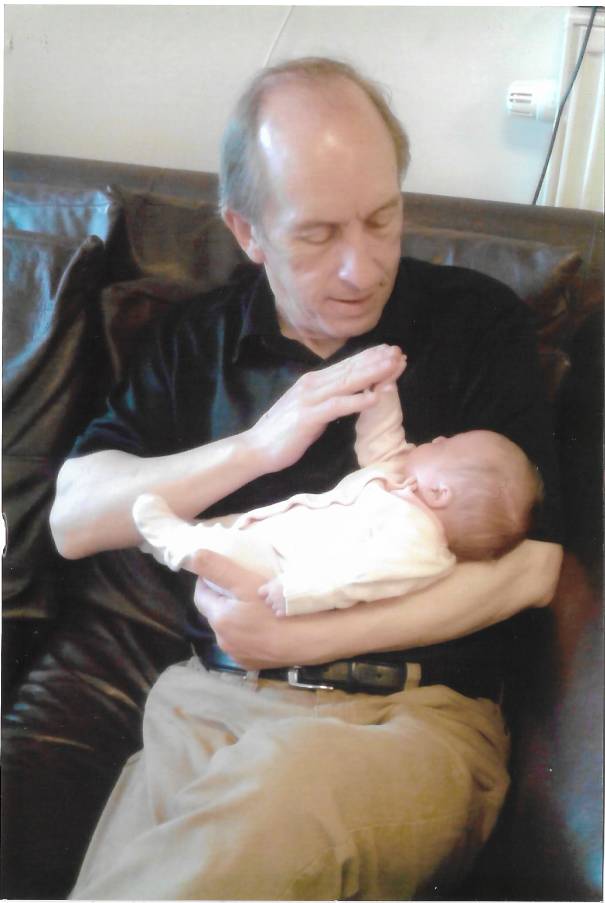
I had a newborn daughter – Sian.
When I started my weight-loss journey all those years earlier, there was no possible way I could have known that part of my future was waiting for me. And suddenly longevity meant something rather different….
It wasn’t about reaching a particular age, adding another five, ten or twenty years to a statistic. It was about being there.
Being a father again.
Being physically capable of picking my daughter up and carrying her in my arms. Being able to play, explore and experience another completely unexpected chapter of my life.
Perhaps that’s ultimately the biggest lesson I’ve learned from losing the weight and maintaining that loss for more than 27 years.
We can have reasons for improving our health today. We can set goals.
We can think about our waistline, fitness, confidence, cardiovascular health, metabolic health or the number on the scales.
But none of us knows everything our future life has waiting for us – some of the best reasons for looking after your health may be the ones that haven’t happened yet.
For me, one photograph explains that better than another thousand words ever could.
Where Do You Go From Here?
My reasons for losing weight were personal to me. Yours will be personal to you — and your starting point may be very different from mine.
If this story has made you think about your own weight, health or what you’d like to change, these two resources may help you decide what to do next.
Want to understand your current metabolic health?
Take the Metabolic Reset Self-Assessment — a quick way to look at some of the signs and lifestyle factors that may be worth paying attention to.
Ready to start losing some weight?
Read How to Lose 10lbs — where I explain the practical food and lifestyle changes you can use to start moving your weight in the right direction.