

Not all body fat is the same. The fat you can pinch under your skin might be frustrating, but it is not necessarily the biggest health threat. The real danger often lies deeper inside your body — visceral fat (a type of adipose tissue stored around your internal organs). Unlike ordinary body fat, this excess, unwanted adipose tissue that strangles your organs is metabolically active, meaning it interacts with hormones, inflammation pathways, and blood sugar regulation. This is why researchers consistently link excess visceral adipose tissue with increased risk of chronic disease.
The Silent Killer: Are you “TOFI”? You can have a “normal” BMI and still be at high risk. This is known as Thin Outside, Fat Inside (TOFI). Research from Harvard Health shows that even in healthy, non-smoking men, every 2 inches of additional waist size raises the risk of cardiovascular disease by 10%. If you have “skinny arms” but a protruding “hard” belly, your “metabolically active adipose tissue surrounding your organs” is likely in the danger zone.
Understanding how visceral adipocytes work (and how to reduce them) is one of the most important steps in improving long-term health.
What Is Visceral Fat and Why Does It Matter?
To understand what is visceral fat, you have to look past the surface, under the subcutaneous fat and into the actual abdominal cavity and around the organs…
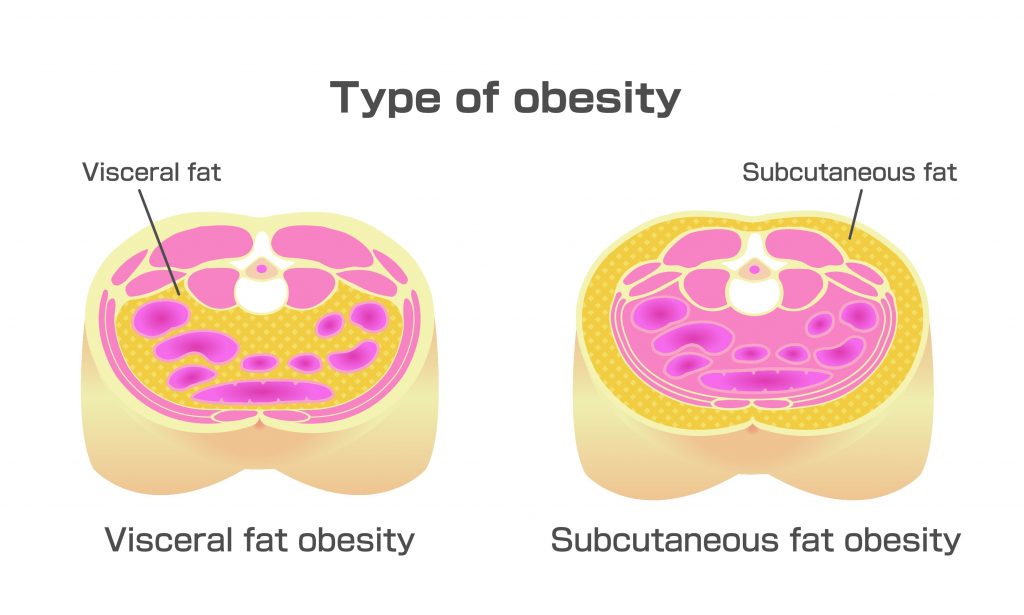
Visceral Fat vs Subcutaneous Fat
Illustration of visceral fat surrounding the organs, compared to subcutaneous fat sitting between the skin and the abdominal cavity.
This type of fat behaves very differently from the fat stored just under the skin. Visceral fat is metabolically active tissue.
| Fat Type | Location | Health Risk |
|---|---|---|
| Subcutaneous fat | Under skin | Lower risk |
| Visceral fat | Around organs | High metabolic risk |
Visceral Adipose Tissue releases inflammatory chemicals and hormones that can interfere with normal metabolism. Over time, this can affect insulin sensitivity, cholesterol levels, and cardiovascular health.
This is why doctors often pay close attention to abdominal fat distribution, not just body weight.
Why This Visceral Adipose Tissue Is Dangerous
Excess visceral adipose tissue has been strongly linked to several major health problems. Research associates high levels of visceral fat with increased risk of:
- Type 2 diabetes
- Cardiovascular disease
- Fatty liver disease
- High blood pressure
- Metabolic syndrome
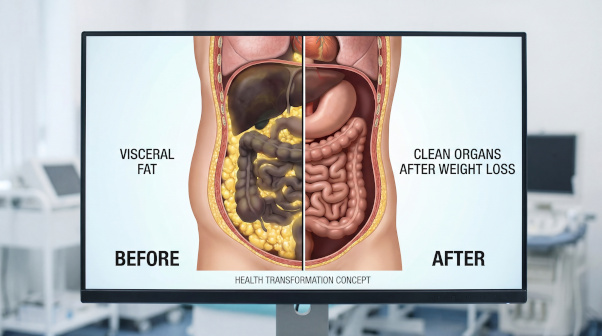
Visceral Adipose Tissue is fat stored deep inside the abdominal cavity [PubMed], surrounding vital organs such as:
- the liver
- pancreas
- intestines
Because visceral fat surrounds internal organs, it can interfere with normal metabolic signalling and increase systemic inflammation. One of the key weight loss benefits for men is the reduction of this internal pressure. Implementing effective male weight loss strategies isn’t just about aesthetics; it’s the foundation of men’s fitness and weight loss success.
This is the engine room of the Aromatase Factory. Visceral fat produces enzymes that literally convert your testosterone into estrogen. To see the exact 2024 data on how weight loss restores T-levels by 94%, see my [Testosterone Reset Post].
For men, excess belly fat may also contribute to:
- reduced testosterone levels
- lower energy and motivation
- erectile dysfunction risk
- increased fatigue
These hormonal effects are explored further in our guide to weight management for men.
How to Measure Visceral Fat at Home: The Waist-to-Height Rule
Medical imaging such as CT scans or MRI can measure visceral fat directly, but these are not practical for everyday monitoring. Fortunately, a simple home measurement can provide a strong indicator of risk.
The Waist-to-Height Rule
A useful guideline is:
Keep your waist circumference less than half your height.
Examples:
| Height | Healthy Waist |
|---|---|
| 170 cm | < 85 cm |
| 180 cm | < 90 cm |
Keep your waist less than half your height
This simple rule is widely used as a practical screening tool for abdominal obesity and metabolic risk. If your waist measurement is approaching or exceeding this ratio, it may be a sign that visceral fat levels are increasing.
Decoding Your Smart Scale: What Does “Level 10” Mean?
If you use a BIA (Bioelectrical Impedance) scale at home, you will likely see a visceral fat rating between 1 and 59.
- Rating 1 – 12: Healthy. You have a balanced amount of internal fat.
- Rating 13 – 59: Excessive. This indicates a high metabolic risk and the potential for “The Aromatase Trap” (where fat steals your testosterone).
Phil’s Note: Don’t panic if you are a 13+. My 27-year blueprint is designed specifically to move you back into the “Green Zone” (Level 1-12) within 12-16 weeks.
You can measure your own baseline using our Fitness Self-Assessment Checklist.
Symptoms That May Indicate High Visceral Fat
Excess visceral fat does not always produce obvious symptoms, but several common signals often appear together.
Possible indicators include:
- persistent fatigue
- poor sleep quality
- strong sugar or carbohydrate cravings
- reduced physical motivation
- increasing waistline despite stable body weight
In men, additional symptoms may include reduced energy, lower testosterone levels, and difficulty maintaining lean muscle mass.
How to Reduce Visceral Fat Naturally
Visceral adipose tissue can be reduced naturally through a healthy low-carb diet and/or exercise. However, it is important to note that not all exercises produce the best results. A diet AND exercise regime is the best overall (and most effective) way to reduce visceral adipose tissue.
Best Exercises for Reducing Visceral Fat
Research consistently shows that regular physical activity is one of the most effective ways to reduce visceral fat. Both aerobic exercise and resistance training can contribute to reductions in abdominal fat stores.
Moderate Cardio
Activities such as:
- brisk walking
- cycling
- swimming
- jogging
can significantly reduce visceral fat when performed consistently. However, steady state cardio exercise has also been linked with an increase in cortisol levels. Sustained increases in cortisol cause weight gain!
The Cortisol Trap: Research into exercise “compensators” (UCD, Ireland) found that while 25% of people respond perfectly to steady-state cardio, a staggering 75% of individuals actually struggle to lose weight—or even gain it—due to the body’s inability to manage the cortisol spike from long-duration endurance training. This is why my blueprint prioritizes “All-Out” Intensity followed by deep recovery.
Public health guidelines generally recommend at least 150 minutes of moderate exercise per week for metabolic health.
HIIT Workouts for Belly Fat
High-intensity interval training (HIIT) has become popular because it can produce similar fat-loss benefits in less time. Research comparing HIIT with moderate continuous training shows that both methods can reduce visceral fat when total work is similar. The main advantage of HIIT is time efficiency, making it attractive for people with busy schedules.
Strength Training
Resistance training may not always reduce visceral fat as rapidly as aerobic exercise, but it plays an important role in long-term metabolic health.
Strength training helps:
- preserve lean muscle mass
- improve insulin sensitivity
- increase resting metabolic rate
- support sustainable fat loss
For long-term weight management, combining cardio activity and strength training often produces the best results.
How Much Exercise Is Needed to Reduce Visceral Adipose Tissue?
Research suggests a clear dose-response relationship between physical activity and visceral fat reduction.
General guidelines indicate:
- 150 minutes per week of moderate activity may help prevent visceral fat gain
- 225–300 minutes per week is often associated with greater fat reduction
- vigorous exercise or HIIT can provide similar benefits in shorter sessions
The key factor is consistency over time rather than short bursts of extreme training.
Lifestyle Changes That Help Reduce Visceral Fat
Exercise is powerful, but long-term visceral fat reduction typically requires a combination of lifestyle strategies.
These include:
- eating whole, minimally processed foods
- reducing refined carbohydrates and sugary drinks
- prioritising protein intake
- maintaining regular physical activity
- improving sleep quality
- managing chronic stress
The Good, The Bad, and The Inflammatory Fats…
- The Good: Omega-3s (Salmon/Walnuts) – Shuts down visceral inflammation.
- The Bad: Refined Seed Oils – Fuels the “Aromatase Factory.”
- The Strategic: MCT Oil – Bypasses normal digestion to provide immediate brain fuel during your “All-Out” sets.
These principles form the foundation of the 27-Year Blueprint approach to sustainable weight management.
Nutritional science reveals : “To burn fat, you must eat fat” (but of the right kind). My upcoming ‘Fats for Fat Loss’ PDF explains how Omega-3s and MCTs specifically target the inflammation in visceral adipose tissue.
Your Next Step
Understanding visceral fat is an important first step toward improving metabolic health. But before starting any weight-loss programme, it helps to understand your current baseline. Your waist measurement, lifestyle habits, and health indicators provide valuable information about where you are starting from.
You can assess your personal baseline using the Fitness Self-Assessment Checklist, which helps identify early warning signs linked to abdominal fat and metabolic health.
🧬 Beyond Exercise: The Nutritional “Switch” for Internal Fat
As we’ve discussed, visceral fat is an “inflammatory factory.” While movement is the signal to burn, your nutrition provides the environment for that burn to happen.
Most people make the mistake of cutting all fats when trying to lose weight. However, research into male weight loss strategies shows that certain lipids are actually “metabolic keys” that help shut down systemic inflammation and reset your fat-burning hormones.
To help you navigate this, I’ve compiled a comprehensive guide: Fats for Fat Loss: The 27-Year Guide to Hormonal Fuel.
Inside this free PDF, you’ll discover:
- The “Traffic Light” Fat System: Which oils fuel the “Aromatase Factory” and which ones shut it down.
- MCTs and the Brain: How to use medium-chain triglycerides to fuel your “All-Out” HIIT sessions.
- The Testosterone-Omega Connection: Why the right fats are essential for reaching that 94% success rate in hormonal restoration.
[Download the ‘Fats for Fat Loss’ PDF & Blueprint Extension Here]
People Also Ask:
Can you feel visceral fat?
Yes. Unlike subcutaneous fat (which is soft and jiggly), visceral fat is located behind the abdominal wall. This is why a ‘beer belly’ often feels hard to the touch.
How long does it take to lose visceral fat?
Visceral fat is actually the ‘first in, first out’ fat. Because it is so metabolically active, a 12-week commitment to HIIT and a low-carb diet can often reduce visceral adipose tissue levels by 2-3 points on a smart scale.
Is walking enough to reduce visceral fat?
Brisk walking is an excellent start, but for a true ‘metabolic reset,’ resistance training is required to improve insulin sensitivity, with strength training to create long term metabolic reset and sustainable loss of visceral adipose tissue.
HIIT vs strength training for visceral fat reduction?
High intensity interval training (HIIT) and strength training have similar capacities in reducing visceral adipose tissue. However, HIIT has been shown to be more effective in the short term, while Strength Training is more suited to sustaining visceral‑fat loss in the long term long term. A strategic combination of HIIT and Strength training will initiate a short term loss of visceral adipose tissue and long term metabolic reset changes through strength training.